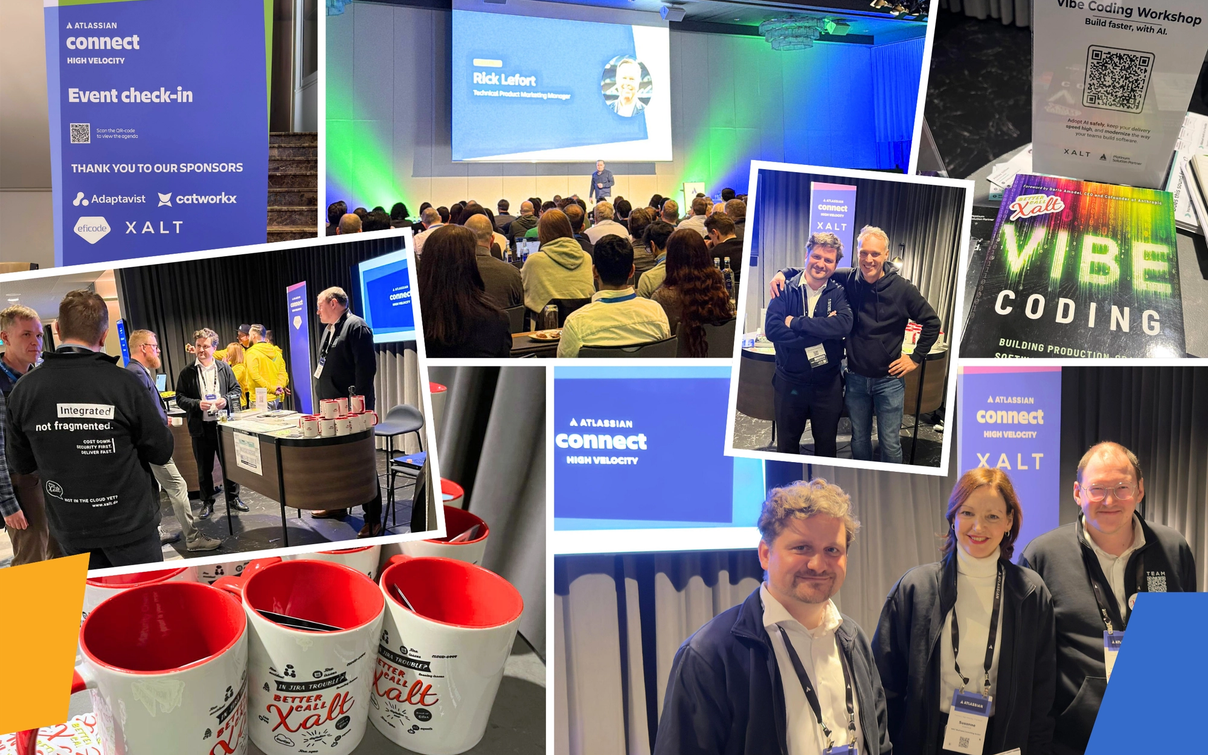
On 19 February 2026, we were present at the Atlassian Connect High Velocity in Frankfurt not only as participants but also as an official sponsor, making it an ideal platform for exchange, inspiration, and concrete impulses for our customer projects.
A content highlight was the keynote by Rick Lefort. His central message: Service Management is facing a fundamental change. With the Atlassian Service Collection, Atlassian shows how companies can break down silos, use AI meaningfully, and become true high-velocity organisations.
The most important news at a glance
- AI Agent Rovo: Answers requests in real time, learns continuously through coaching, and relieves teams.
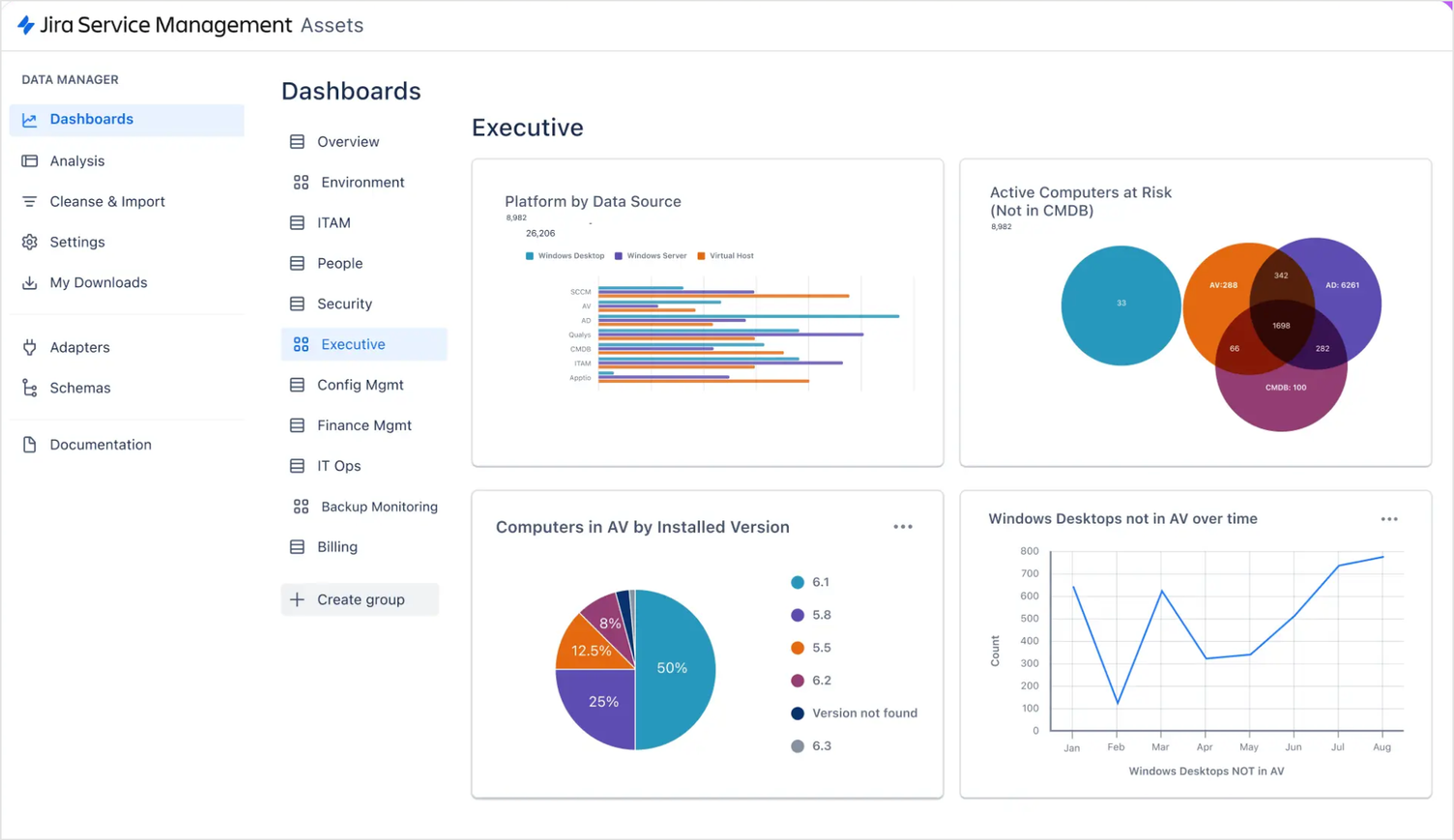
- Asset Data Manager: Imports, cleans, and synchronises data from over 20 sources for a central data base.
- Omnichannel Support: Integration, for example, with Amazon Connect for direct telephony and automatic transcripts in Jira.
- Seamless Escalation: Tickets can be forwarded from the Service Desk to the development project with a single click.
- New IT-Ops Features: AI-supported alarm bundling and a revised Change Calendar for faster incident resolution.
For us, this keynote was more than a product update – it was a strategic outlook on what modern Service Management must look like.
The big topic: High-Velocity through AI, context, and collaboration
The central thesis of the keynote: “Waste less time putting out fires, spend more time on innovation.”
High-Velocity does not simply mean working faster. It means acting more intelligently, in a context-driven manner, and networked across teams.
The key lies in three building blocks:
- AI-powered automation with Rovo
- A central, interconnected data foundation with Assets
- A unified platform that connects development, IT-Ops, business teams, and customer service
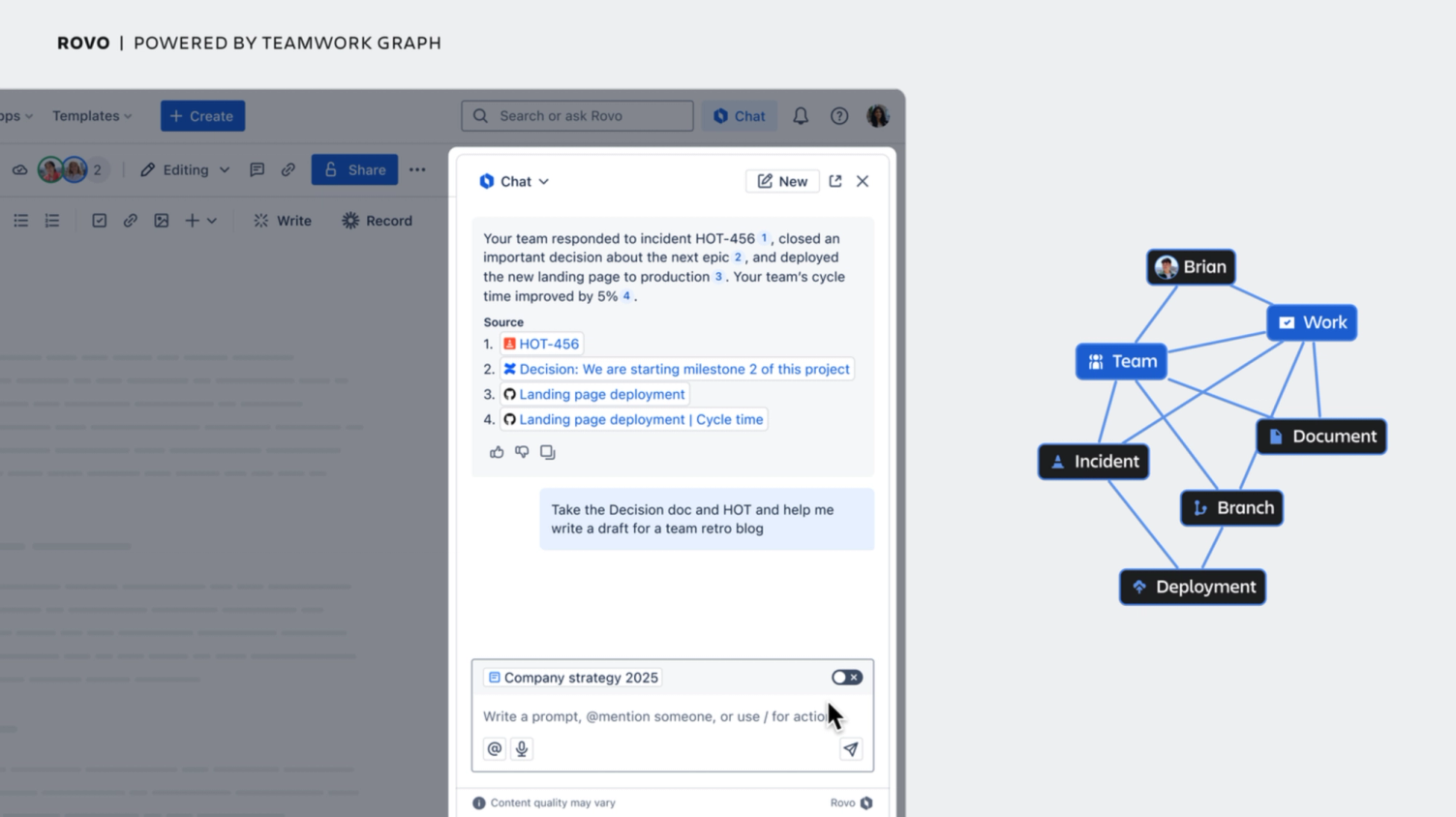
The magic behind it? The Teamwork Graph: Because AI is only as good as the context behind it.
The 3 core components of the Atlassian Service Collection
1. Customer Service Management: Breaking down silos between support and development
Classic problem: Support teams talk to customers – development teams work in the backlog – and both worlds are separated from each other.
With Customer Service Management, this disconnect is resolved.
What this specifically means:
- Omnichannel support
Integration with Amazon Connect enables handling phone calls directly in Jira, including automatic transcripts. - AI agent Rovo
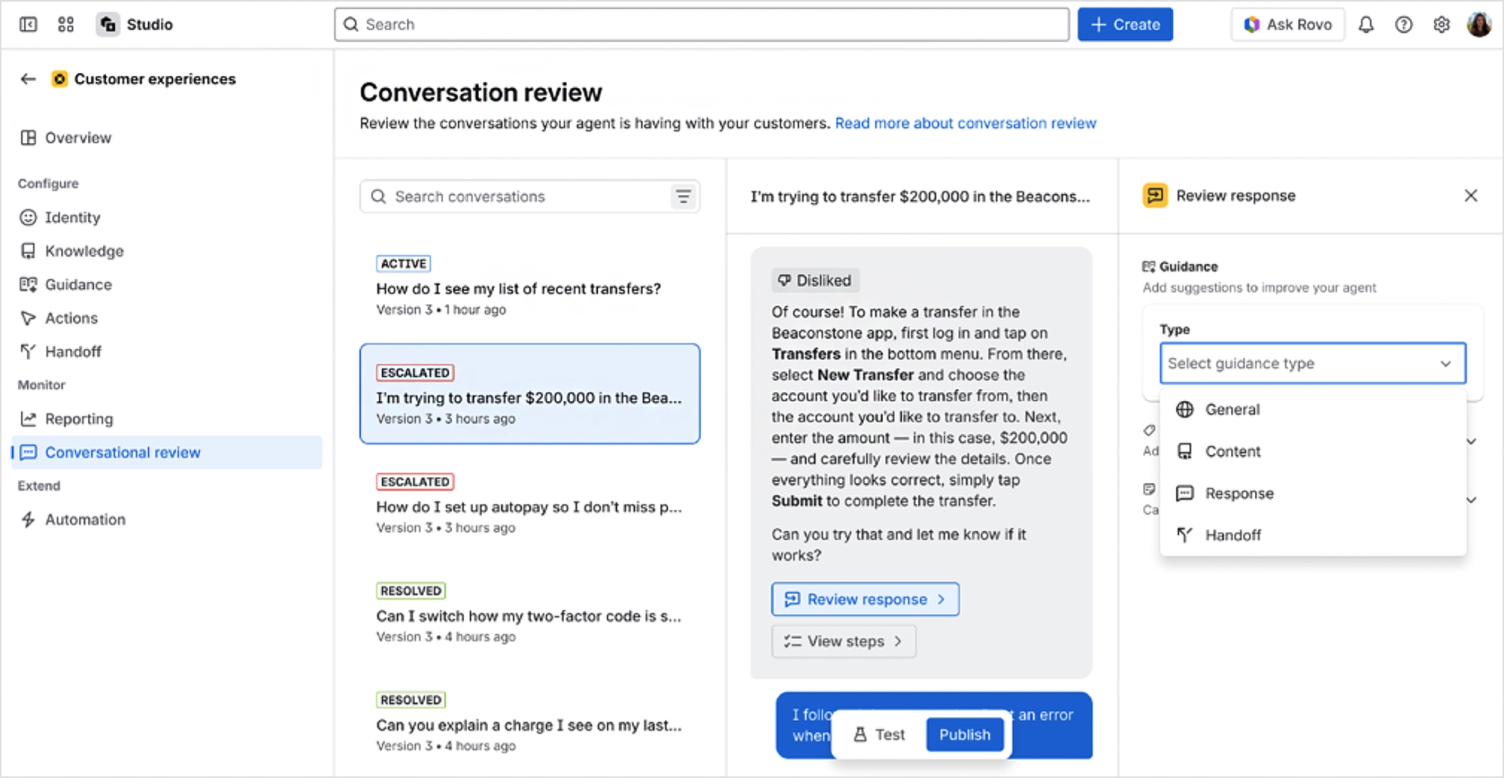
The AI agent answers queries in real time, personalises responses, and continuously learns through direct coaching. - Seamless escalation
With one click, a support ticket is transferred to the relevant development project in Jira, without loss of context.
The result:
Customers do not have to tell their story multiple times. Developers receive the full context. Resolution times decrease significantly.
2. Jira Service Management: Redefining internal services
Jira Service Management is long since no longer just an IT tool. It is the central platform for internal services – from HR to Finance to Facility Management.
A value of 275 % ROI over three years cited by Forrester shows: This is not about incremental improvements, but about real transformation.
Example: Employee onboarding
Instead of fragmented emails and Excel lists, the entire process runs in a central ticket:
- Rovo automatically suggests an onboarding plan
- IT receives tasks for laptops & accounts
- HR takes care of contracts
- Facilities organises the workspace & equipment
- Everything is transparently trackable
Innovations for IT-Ops
New features such as AI-powered alarm bundling on mobile devices or an updated Change Calendar help Ops teams resolve incidents faster and proactively avoid outages.
Or as Rick put it with reference to a Formula 1 team: “This is essentially testing in production at 200 miles per hour. I call that business-critical!”
3. Assets: The strategic data foundation for everything
Perhaps the most strategically important message of the keynote:
Assets is no longer just a CMDB; it is the global data platform of the Atlassian world.
Assets manages:
- Digital assets (systems, applications, services)
- Physical objects (laptops, devices, infrastructure)
- Business objects of any kind
And crucially: it maps their relationships.
This data flows directly into the Teamwork Graph, providing the AI with the necessary context.
Practical example: A museum planning an exhibition:
- Artworks
- Display cases
- Audio guides
- Service requests
- Logistics
Everything is modelled as assets and is visible across the platform, for example documented in Confluence.
Key new features:
- Asset Data Manager is now available in all Cloud instances
- Import, cleansing and synchronisation from over 20 data sources
- Scalability to up to 10 million objects
This creates a reliable 'Single Source of Truth', into which XALT also integrates your SAP, HR and other systems.
Our key learnings for XALT customers
Three clear areas of action can be derived from the keynote:
1. Think strategically about assets – not just technically
Start modelling business-critical physical and digital objects alongside classic IT assets. Use the Asset Data Manager to break down data silos and build a consistent data foundation.
Our customers also use assets for compliance requirements – for example, to trace responsibilities for AWS accounts in Container8 (DevSecOps-as-a-Service Platform), monitor the lifecycle of accounts, and escalate security issues to the relevant people.“
2. Start pragmatically with AI in service
First use Rovo internally for recurring queries in customer or employee service. Roll out to end customers in stages, review the performance of the responses, and use the coaching function strategically to continuously improve quality.
3. Build the bridge between support and development
Implement an end-to-end escalation workflow between the service desk and the development backlog. Measure:
- Reduction in resolution times
- Quality of the feedback loop
- Customer satisfaction
Conclusion: High-velocity is not a buzzword but an operating model
The central message of the keynote puts it succinctly:
“With the Atlassian Service Collection, companies are not just keeping pace with change – they are setting the pace for the future.”
High-velocity emerges where:
- Context is not lost
- Data is interconnected
- AI is used effectively
- Teams do not work in silos
For us at XALT, it is clear:
Service management is becoming a strategic discipline and the foundation for innovation capability.
The question is no longer whether companies should transform their service organization. But how quickly they should start.
Secure the future of your service management!
Check your ITSM Maturity Level to identify where your company currently stands. Contact XALT, and we will show you how to take your IT service management to the next level and successfully implement the new features of the Atlassian High-Velocity Strategy in practice.