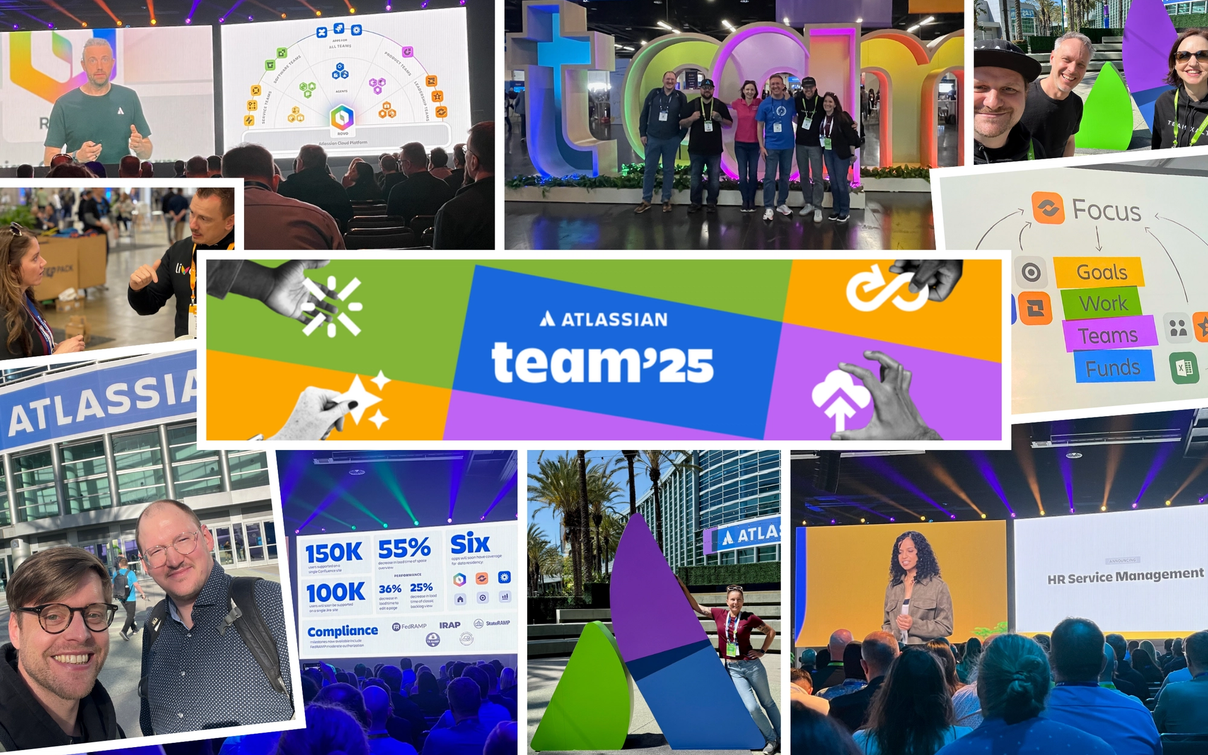
Atlassian is restructuring its product portfolio – moving away from standalone solutions towards integrated, outcome-focused Collections that are AI-native from the ground up. At the centre of this is Rovo as an agent layer that automates work, connects context, and visibly relieves the burden on teams. In parallel, the Atlassian Cloud platform continues to grow into a robust enterprise foundation: offering greater scalability, clearer data sovereignty, and better governance options.
In Part 2 of our update from Atlassian Team'25 Europe, we summarise the key innovations with a focus on Collections and Cloud.
“Collections”: added value for the System of Work
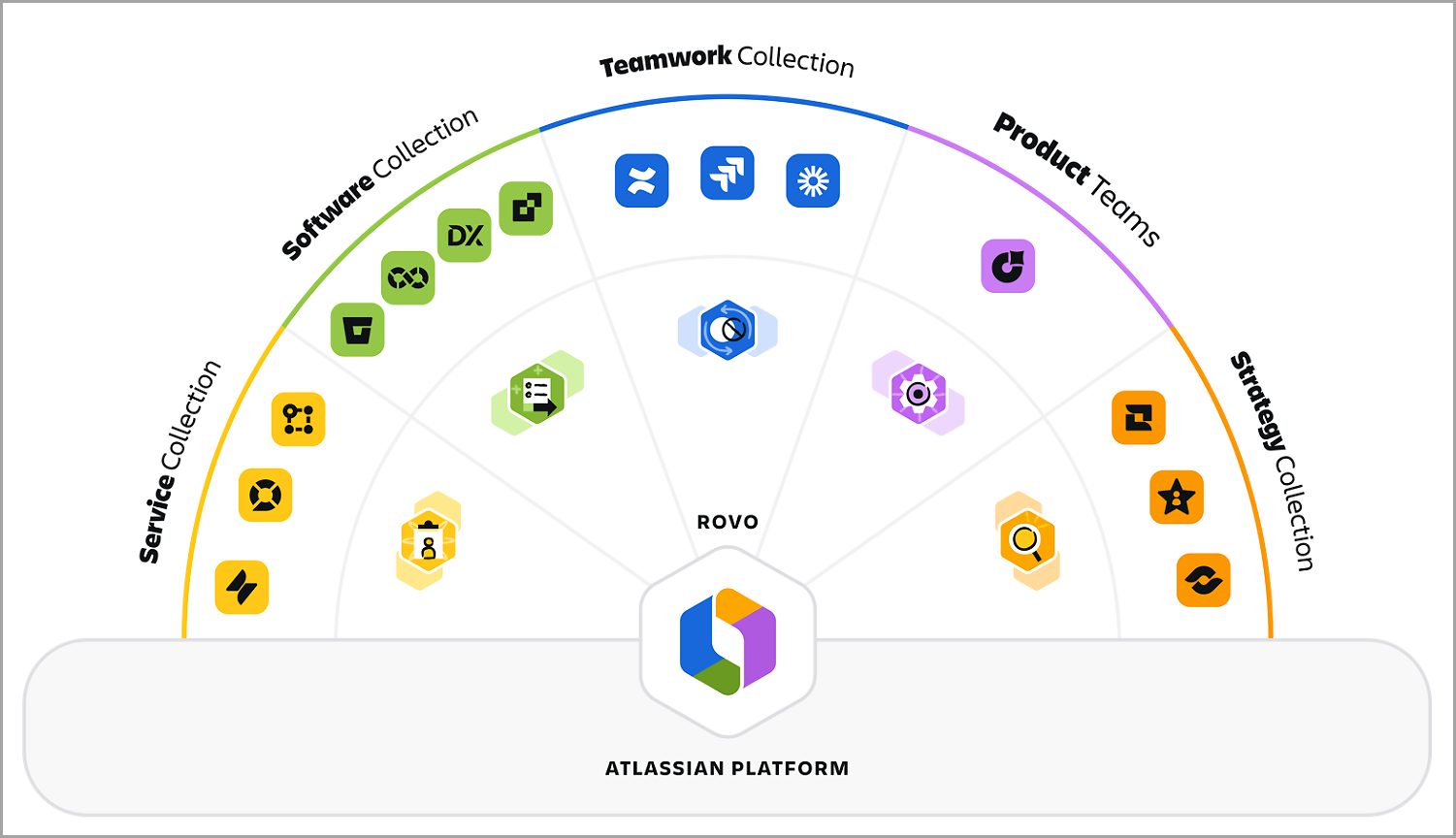
The “Collection” model represents Atlassian’s strategic shift from individual products to integrated, outcome-oriented solutions. Each Collection comprises a selection of applications and specialised Rovo agents tailored to the end-to-end requirements of a specific business function.
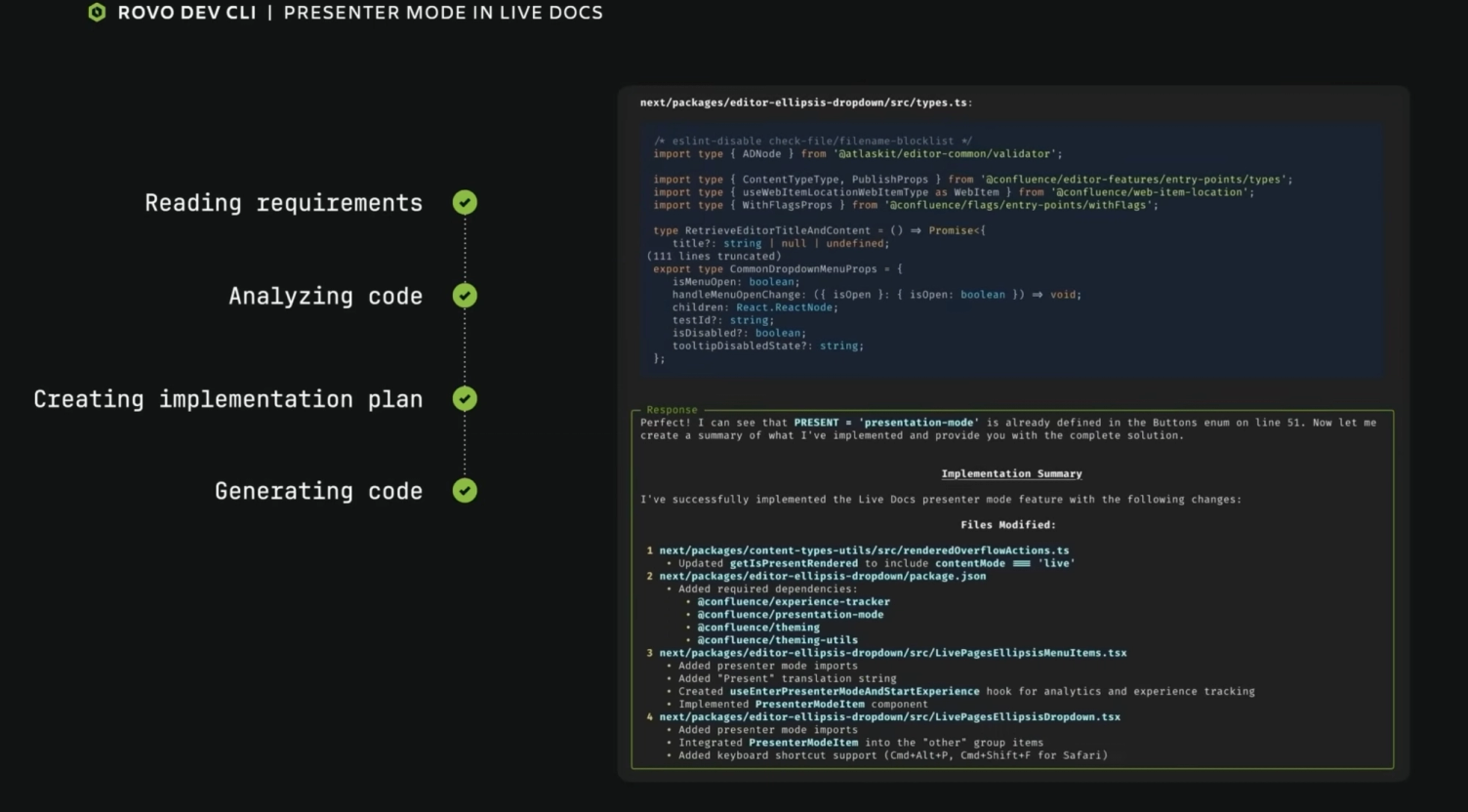
Software Collection: The AI-native SDLC
The newly introduced Software Collection is Atlassian’s solution for a modern, AI-native Software Development Life Cycle (SDLC).
The collection includes the following components:
- Rovo Dev
- Bitbucket (for both source code management and CI/CD pipelines)
- Compass (a software component catalogue)
- DX, the newly acquired engineering intelligence platform.
Strategic objective: The main goal is to increase “developer satisfaction” by eliminating friction, automating repetitive tasks and enabling developers to focus entirely on their work, i.e. staying in “flow”.
Rovo Dev: Rovo Dev is now generally available and is the AI agent for the entire Software Developer Lifecycle (SDLC). It supports developers with planning, code generation, automated code review and debugging in CI/CD pipelines. It is integrated directly into the developer’s workflow via the command-line interface (CLI), IDE and Bitbucket, and can soon be assigned directly from Jira issues.
Other key features: The Collection offers robust CI/CD automation with Bitbucket Pipelines and comprehensive governance through Compass. The integration of DX is strategically significant, as it provides quantitative metrics such as pull request cycle times, build failure rates and AI acceptance rates, enabling engineering leaders to measure and demonstrate to the executive team the ROI of their tool investments in increasing developer productivity.
Service Collection: Unifying Service Management
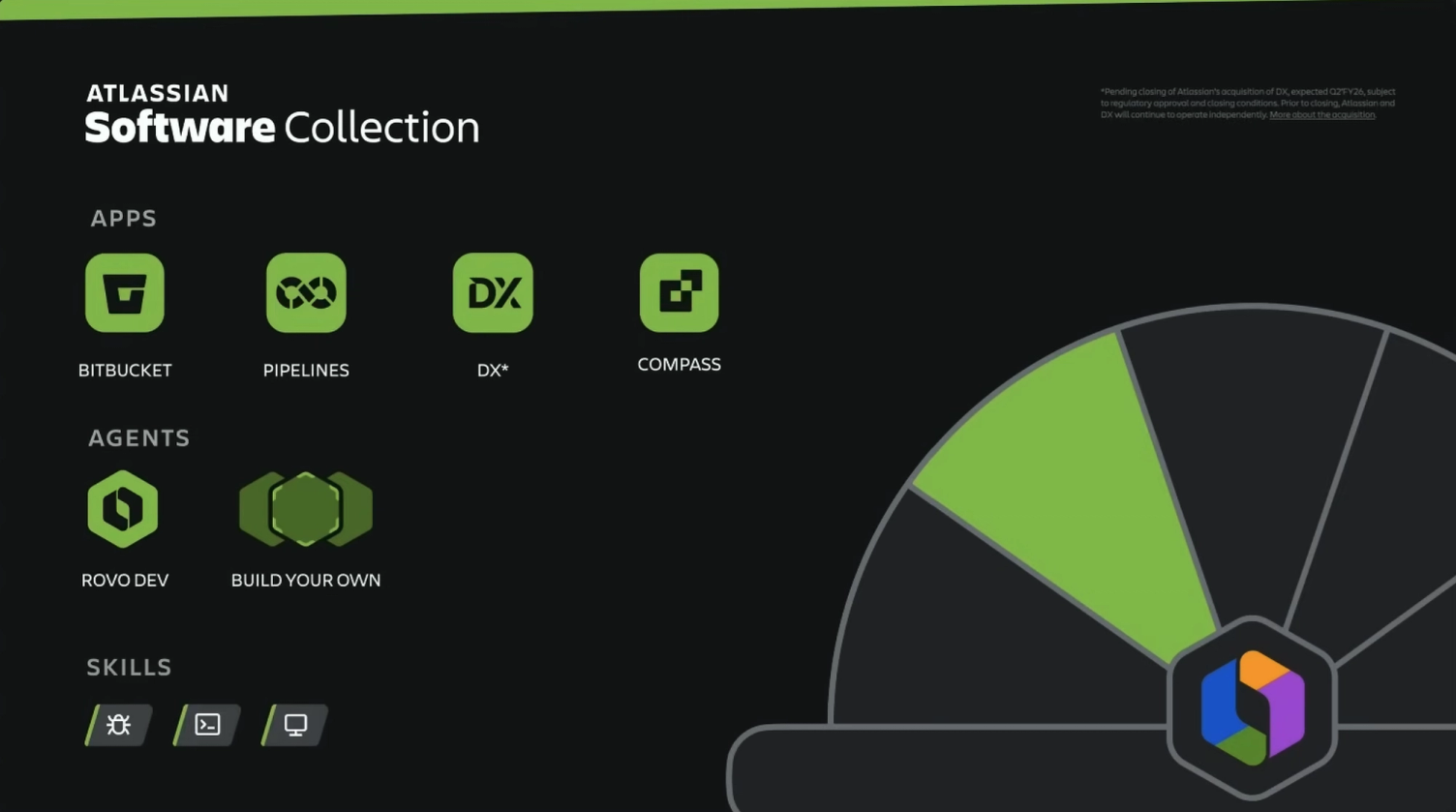
The Service Collection marks a significant expansion of Atlassian’s presence in the service management market and unifies solutions for internal and external support.
This collection includes
- Jira Service Management (JSM),
- the new Customer Service Management (CSM) application,
- Assets (now a platform-level app)
- and the specialized agents Rovo Service and Rovo Ops.
Strategic goal: The Collection was developed to eliminate the traditional separation between internal support (for IT and HR) and external customer support, creating a single, AI-powered platform for all service delivery operations.
Rovo Service & Rovo Ops: These agents are the engines of the new Service Collection. Rovo Service automates complex support processes for HR and IT teams, such as coordinating a cross-departmental onboarding workflow for employees.
Rovo Ops brings AIOps capabilities to the forefront, performing root cause analysis for incidents, grouping alerts to reduce noise, and recommending remediation actions, while integrating with key observability platforms such as Dynatrace, New Relic, and BigPanda.
Other key features: The Service Collection offers AI-powered employee support and advanced AIOps for IT operations via JSM and Rovo Ops. The new CSM app provides an AI-based omnichannel solution for external customer support, characterized by seamless handovers between AI and human agents and integration with telephony systems such as Amazon Connect. With this launch, Atlassian positions itself as a direct competitor to established providers like Zendesk and Salesforce Service Cloud. The main differentiator is the native, deep integration into the Jira development ecosystem, creating an unprecedented feedback loop from customer bug report to developer backlog.
Teamwork Collection: Optimizing core collaboration
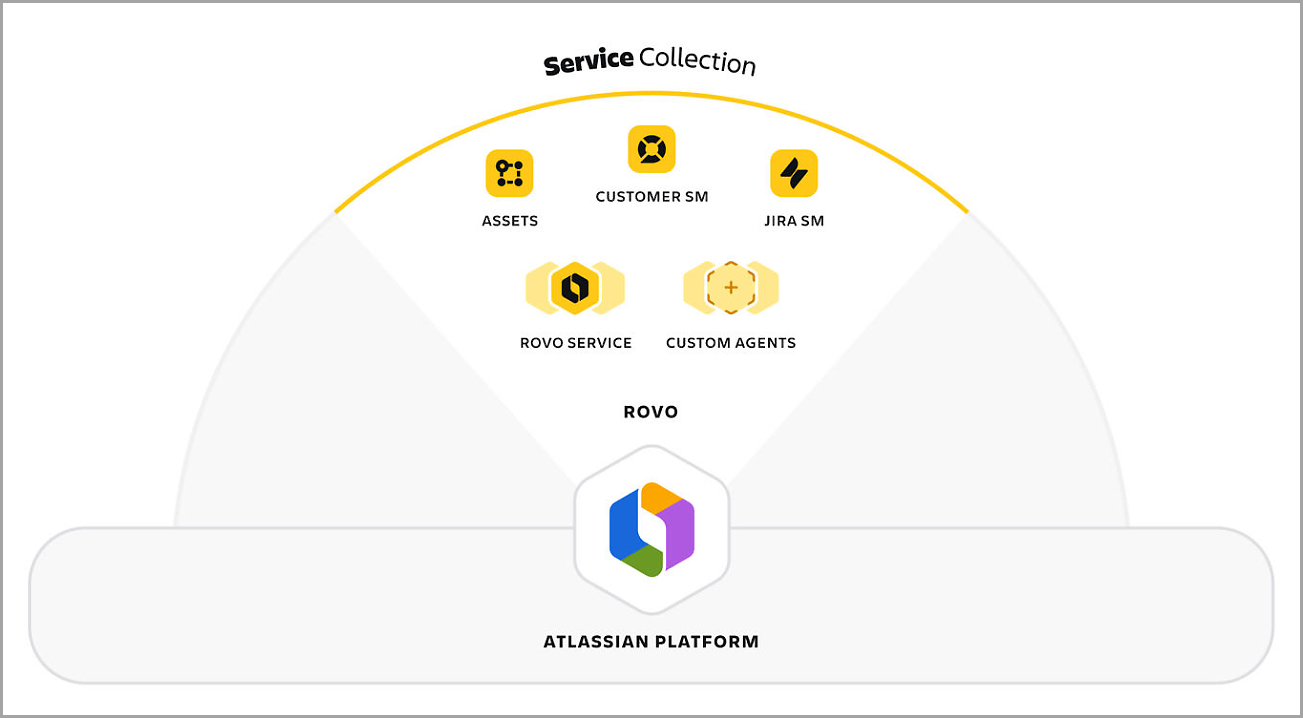
The Teamwork Collection extends Atlassian's core collaboration suite with a powerful AI layer to accelerate workflows.
The Collection includes the core products Jira, Confluence, and Loom, all of which are enhanced by Rovo.
Strategic goal: To equip the collaboration tools used daily with AI-native features that accelerate the process from idea to concrete work output.
Key new features: A standout feature is “Create with Rovo” in Confluence, which allows users to create structured documents from simple inputs. Example: Creating finished project plans with goals, tasks, KPIs, etc. from meeting notes.
The Loom integration has been deepened to enable optimized bug reporting, where a video recording can automatically generate a Jira work item and Rovo can suggest updates for Jira issues based on the video content.
The Collection also offers the ability to assign Jira work items directly to AI agents, including third-party agents from partners such as Canva and GitHub, as well as a new “Audio Briefings” feature in Confluence that synthesizes page content into a concise audio summary for on-the-go consumption.
Strategy Collection: Connecting the executive level and code
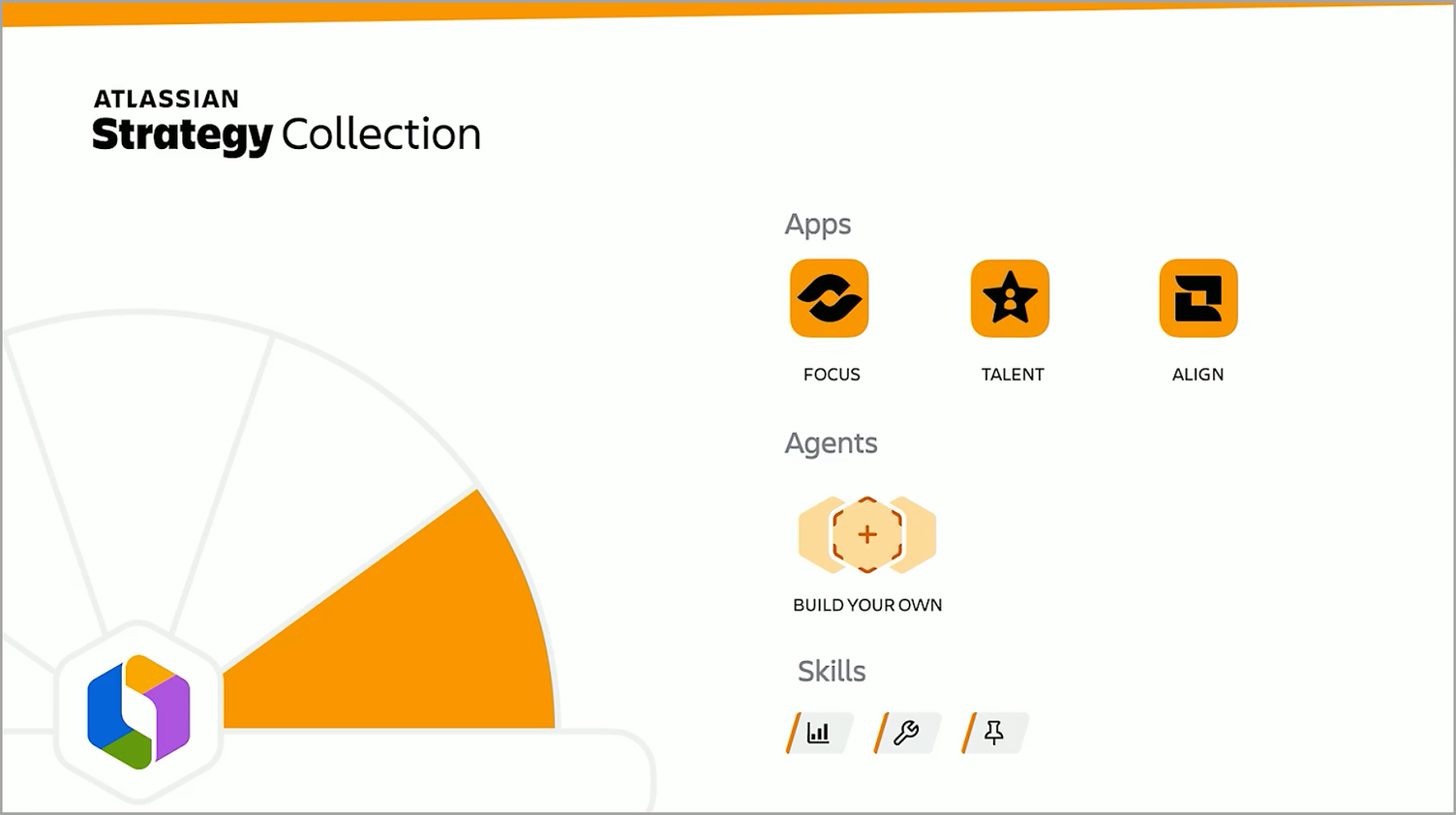
The Strategy Collection was specifically developed for executives in enterprises and offers a dynamic real-time alternative to static strategic planning tools such as PowerPoint. This executive suite includes Focus, Talent, and Jira Align.
Strategic goal: To provide executives with a living strategy hub that directly connects the company's overarching priorities with execution, talent allocation, and financial investments on the ground.
Key features: Among the new enhancements is the “Funds in Focus & Talent” view, which enables real-time transparency over personnel and material costs in the context of strategic goals. The introduction of “Strategic Events” creates a formal workflow for managing plan changes and course corrections within the ongoing cycle, ensuring that adjustments are made with full context and history. Rovo extends this collection with proactive risk analyses and recommendations.
The Atlassian Cloud Platform: Designed for enterprise scale and trust
Underpinning all these product and AI innovations is a massive, continuous investment in the central Atlassian Cloud Platform, which solidifies its position as a robust, secure, and scalable foundation for the world's largest enterprises.
New frontiers in scalability and deployment
Atlassian has made significant progress to ensure that its platform can meet the requirements of any organisation, regardless of its size or the complexity of the regulations.
Massive scaling possible
The platform has reached key milestones in terms of scalability: Confluence now supports up to 250,000 users per instance, Jira 100,000 users, and Jira Service Management 50,000 users. These figures demonstrate a clear commitment to enterprise use.
Isolated Cloud & Units
Two new deployment options have been announced to remove the last barriers to cloud adoption in heavily regulated industries.
- Isolated Cloud, whose general availability is planned for early 2026, will offer customers with the strictest data residency and compliance requirements a dedicated single-tenant infrastructure.
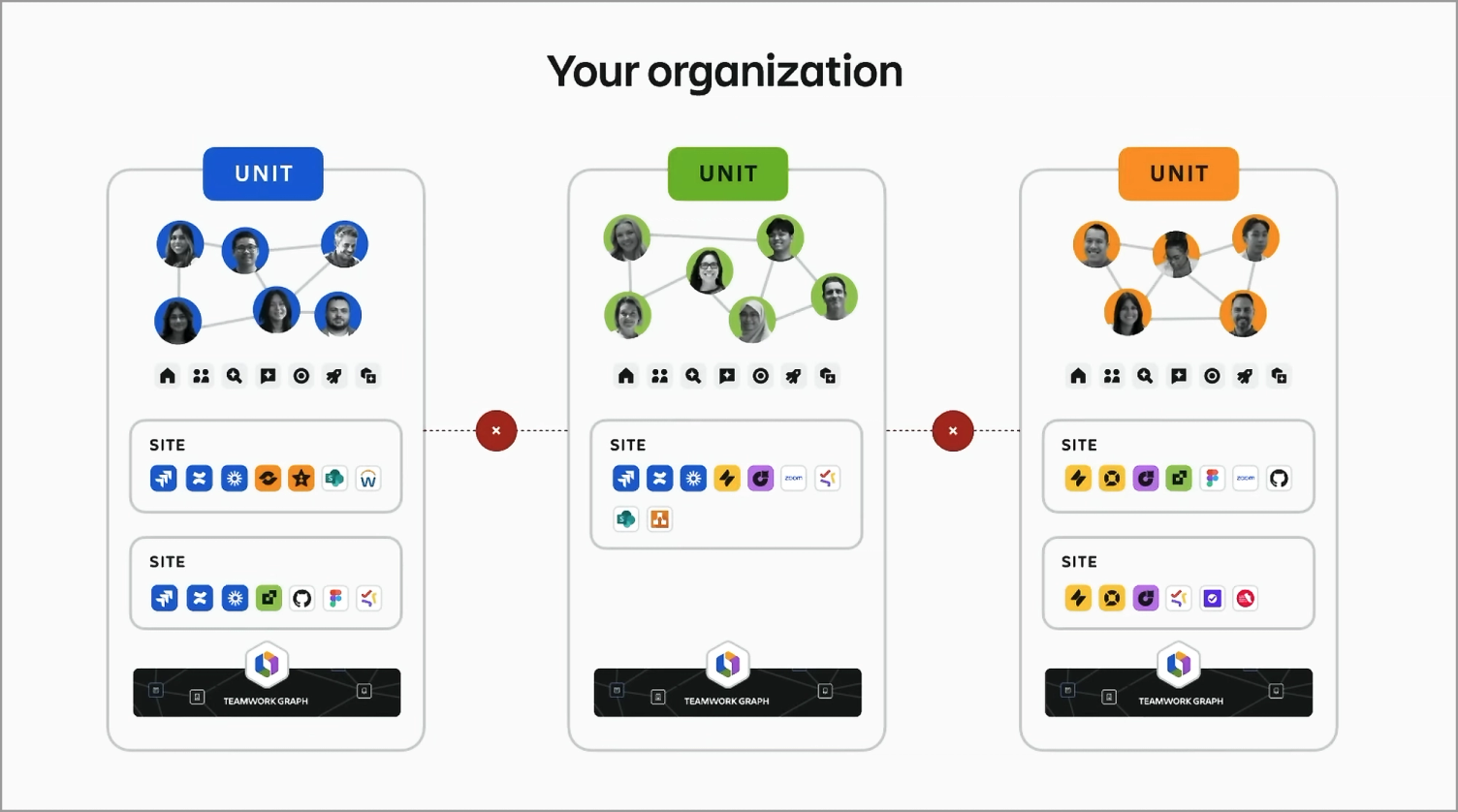
- Units, also planned for early 2026, enables large, complex organisations to create internal boundaries within their Atlassian instance, each with its own user directory, data policies, and team work diagram. This is a critical feature for conglomerates or global companies that must comply with different regional regulations (such as the GDPR) within a single organisational structure.
Enhanced data management: The platform's enterprise capabilities are further strengthened by expanded data residency support for additional services, including Rovo and Analytics, as well as upcoming improvements to backup and recovery features.
What does this mean for businesses specifically?
- Prioritise cloud migration
- Start AI where friction exists:
- Rovo Search/Chat for knowledge access & content creation
- Rovo Skills/Studio for automations & agents in real-world processes
- CSM-Agent/JSM for Service & IT-Ops
- RovoDev for Dev-Teams (Code, Reviews, Pipelines)
- Use Teamwork Graph & Assets to connect physical & digital objects with work & knowledge.
- Leverage Strategy/Talent/Focus to finally steer investments, goals, and capacities live (moving away from static decks).
How XALT supports
We support you end-to-end: from cloud migration to AI use cases with Rovo, service transformation, developer workflows, and strategy & workforce planning.
On request, including a scoping workshop, piloting in 20 days, and clear success metrics.