DevOps for Executives and Decision-Makers
DevOps is the catalyst for your company's success and accelerates the delivery of software and IT infrastructure
DevOps lets your Digital Product Teams sustainably boost their performance and thereby positively influence your business goals.
By introducing DevOps, you save valuable resources, speed up your update cycles, and ensure your products are available when they're needed.
With our DevOps Assessment, we give you an initial overview of your organization's status and first recommendations for action.

DevOps helps companies meet the demands of the market and their users for software and IT infrastructure
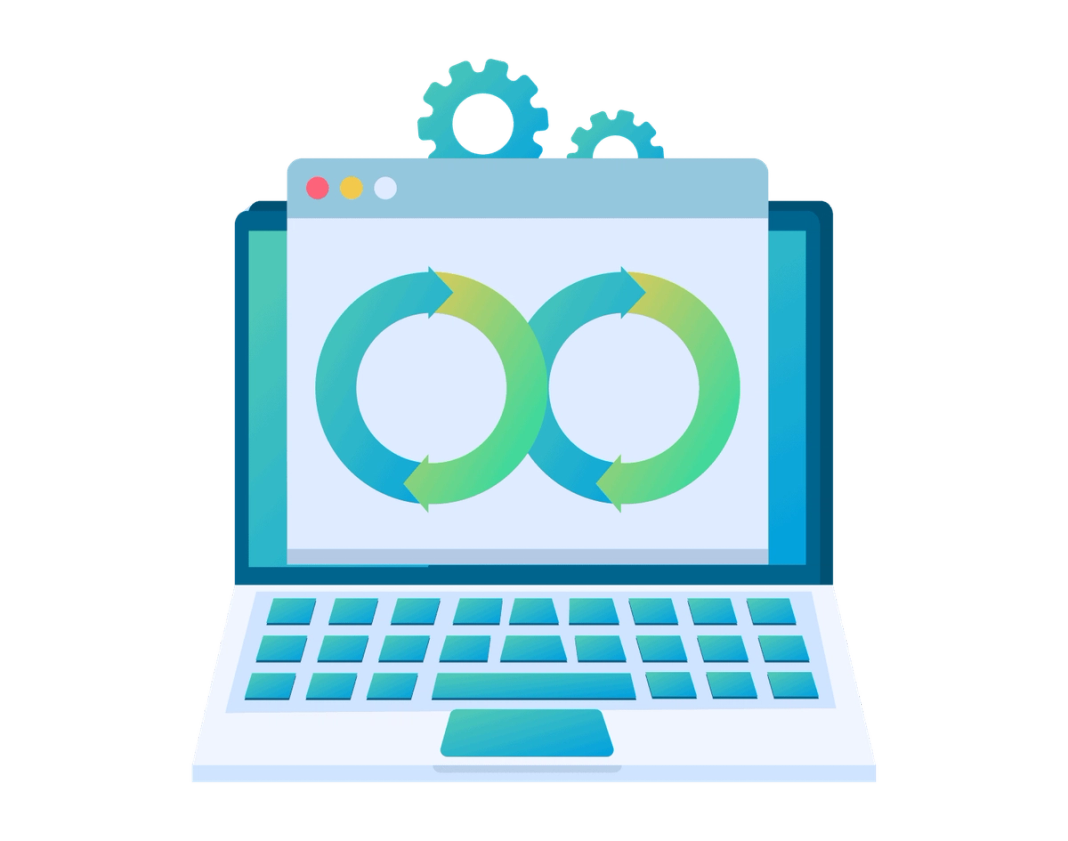
DevOps modernizes the traditional software development process
A successful DevOps introduction takes work off your development departments' and the top management's plate through leaner processes and more efficient review boards. Software projects reach the finish line faster and more easily as a result.
The path to a DevOps transformation succeeds when:
- A shift in company culture toward agile, communicative collaboration is established.
- Tools are provided that ensure barrier-free collaboration between the most diverse teams and departments.
- Change management processes and review boards follow the DevOps approach.
Companies that adopt DevOps are more productive and accomplish more in less time. With a team made up of cross-functional employees working together, companies can use DevOps to achieve a maximum of speed, functionality and innovation.
Break up outdated, sluggish and inefficient company structures
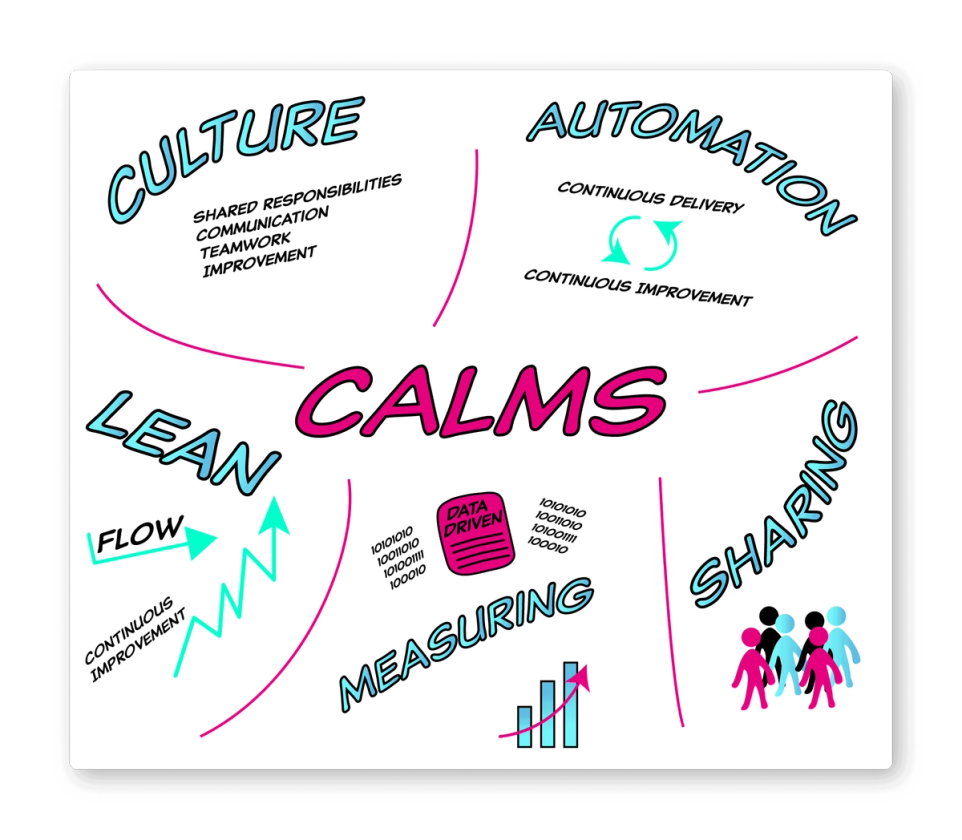
CALMS – Culture, Automation, Lean, Measurement, Sharing
Company Culture - Collaboration, Ownership and Goal-Setting
Shared responsibility and collaboration across department boundaries. Moving away from an “us versus them” mindset. This includes increasingly treating mistakes and tolerances as an opportunity for further development.
A DevOps culture also pursues the goal that, alongside implementation, the team increasingly takes care of operations and further development, actively contributing to company success. This turns your employees more into intrapreneurs who help drive development on their own initiative.
The cultural shift further aims to introduce the building and sharing of knowledge within and across teams.
Learn more about introducing DevOps with the CALMS framework

Technical Methods - Automation and Data Collection
More time to develop features and updates with the help of automation. For example, setting up a continuous delivery infrastructure can take work off your team's plate. This means the required infrastructure (e.g. servers) is automatically provisioned and managed as needed. Constantly waiting for critical systems becomes a thing of the past.
Knowing the current state of the applications maintained by your team enables data-driven decision-making. For example, you can identify active bugs in a desktop application or the uptime of an online service and derive recommendations for action from that
DevOps Transformation - How to Get Started
Strengthen Your Team and Achieve Incredible Success
The world of technology is spinning ever faster, demanding constant adaptation and adoption of new tools and techniques.
Our DevOps Ambassadors transform your company sustainably. And empower your teams with new methods, ongoing data collection and analysis to create an outstanding customer and user experience.
This keeps you not just competitive, but consistently one step ahead of the competition.
Our Partners & Tools




Better call XALT
Want to start with DevOps in your company, or take it further?
We support you in integrating the DevOps methodology and getting the best out of your company. Feel free to contact us by phone, email, or visit us at our office.