AI agents and generative code are all the rage, but the real game-changer for enterprises lies deeper: in the Agent Harness. While AI models and code become increasingly interchangeable, it is the organizational and technological foundation that determines whether AI initiatives can truly scale securely, efficiently, and in compliance. In this article, you'll learn why the Harness is the new backbone of enterprise AI and how XALT supports you in building it.
What is an Agent Harness?
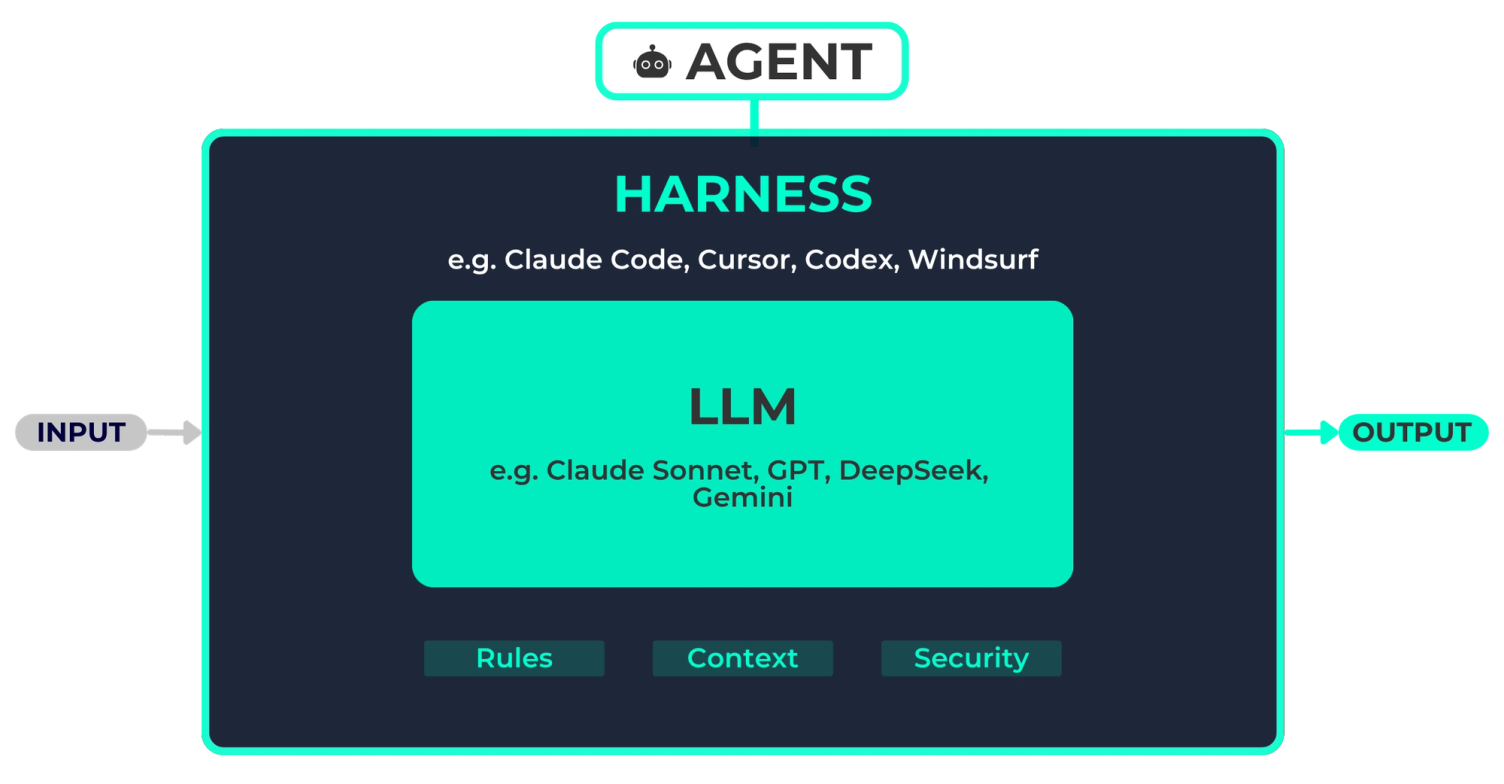
A Harness (often translated as framework, infrastructure, or security foundation) is the organizational and technological framework that grounds and governs AI agents. It consists of several key elements:
- Data Infrastructures and Data Models
The foundation of every AI application: structured, accessible, and up-to-date data. - Numerous bidirectional integrations
For example, interfaces to ERP, HR, and billing systems to supply AI agents with context. - Compliance Controls
e.g., HITRUST r2, which maps regulatory requirements directly into the system. HITRUST r2 represents the highest standards in data protection and information security and is a key building block for companies that want to operate AI solutions securely and in compliance in regulated environments - Internal Governance
For monitoring, steering, and continuous improvement of AI agents. - Business Context as "Ground Truth"
The specific context of your business serves as the ground truth for AI agents and minimizes erroneous decisions.
Why Classical Approaches Fail
Many companies invest in AI models and hope for quick ROI. But reality tells a different story:
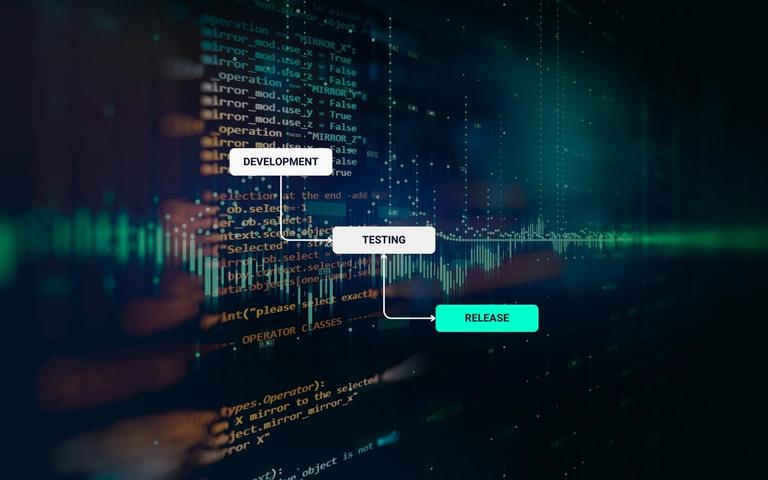
- Traditional Git workflows and CI/CD pipelines break down under the speed and volume of AI-generated code.
- Code reviews and compliance processes become bottlenecks when AI reduces coding from days to hours.
- Lack of Guardrailsleading to hallucinations, security vulnerabilities, and compliance risks, e.g., Shadow IT resulting from uncontrolled AI deployment.
- Maintainability and governance become a challenge when AI agents are operating in production.
The Harness as the True Competitive Advantage for Enterprise AI
One of the keyinsights from the Enterprise AI Summit, shaped by Tisson Mathew (CEO of Skypoint.AI), is that the generated code itself has become a commodity. The true competitive advantage (the so-called "moat") of an organization is not the code, but the harness.
As coding agents become more mature, the harness provides the necessary foundation and context to massively scale output. Companies are increasingly leveraging AI agents to augment their existing teams, even though the promise of replacing developers with agents has only been partially realized so far.
Core Functions and Benefits of a Good Harness
- Minimizing Hallucinations:
The Harness provides agents with hard facts, APIs, and controls as context. This significantly reduces hallucinations and faulty outputs – even though they can never be completely ruled out. - Avoiding the "Hand-Feeding" Anti-Pattern:
Without a Harness, developers must manually feed AI agents with small, perfectly crafted information snippets. A working Harness enables agents to interact with the environment automatically, pulling code on their own, running tests, and triggering deployments. - Shift Compliance Left:
Compliance and security requirements are integrated directly into the development process as 'Policy-as-Code.' Rather than further burdening existing pipelines, modernized, automated validation mechanisms are established that enable development velocity even in highly regulated environments. - Isolated and stable test environments:
For prompt optimization and product development, AI teams need isolated test harnesses—strictly separated from production systems—to test evaluation datasets and AI models in a repeatable, reliable, and automated manner.
The golden rule: 'Build the harness first'
Before companies begin deploying AI agents into production and scaling them broadly, the most important lesson is: the harness must be built first. Only once data, context, integrations, and the compliance substrate are in place can AI agents be deployed safely and effectively.
5 Steps to an Agent Harness for Enterprise AI
To optimally prepare your company for the production deployment of AI agents, you should approach building your harness systematically. The following five steps show you how to create a secure, scalable, and future-proof foundation for enterprise AI:
- Build a Data and Integration Foundation
Ensure that all critical data sources and systems are interconnected. This ensures AI agents always have access to the right information to make sound decisions. Examples include connections to your HR management, accounting, or customer management systems. - Make Workflows and Documentation AI-Friendly
Make sure all key information and developer instructions are available in one clear, accessible place – ideally where the source code is stored. Define clear rules for what good and bad code looks like, and document them. This way, AI agents also know what to look for. - Align Work Processes with Speed and Flexibility
Adapt your workflows to keep pace with AI. This means code changes should be quickly testable and deployable without long wait times. Break large tasks into smaller, manageable units to ensure everything runs smoothly. - Embed maintainability and security firmly into the system
Build mechanisms that make it easy to detect and fix errors. Continuously monitor system performance and ensure you can always roll back to a previous, working version if something goes wrong. This keeps your system stable and secure even during rapid changes. - Build security and compliance in from the start
Instead of running security and compliance checks only at the end, integrate them directly into the development process. Automate these controls so they apply consistently across the board – and can't be overlooked. This ensures all regulations are met without slowing down the workflow.
By building a harness, Skypoint.AI was able to increase engineering output by 5 to 12 times and reduce R&D costs by 50%. The key was laying the foundation first before scaling AI agents. Erroneous outputs and compliance risks were minimized through Ground Truth and Policy-as-Code.
Tisson Mathew, CEO of Skypoint, quote from his talk at the Enterprise AI Summit 2026
Summary
- The Harness is the true foundation for sustainable AI success in the enterprise.
- Classic tools and processes are no longer sufficient for AI-driven development.
- Maintainability, security, and compliance must be designed systematically and automated.
- Companies that build the Harness first benefit from higher output and fewer risks.
- XALT supports you as a partner with the "Harness & Compliance Foundation Setup" – from analysis to implementation.
XALT as your AI Co-pilot
You want to make your AI initiatives secure, compliant, and future-proof?
XALT deliberately leverages the Harness concept to safely unlock the visionary speed from Silicon Valley for the German enterprise market and heavily regulated organizations.
Book a no-obligation AI Assessment with XALT now and find out how to make your company agent-ready: